TC’s Ten Best Films of 2008

I think this year probably marked a new low-water mark for going to the cinema, perhaps since I moved to London in 1987 – largely for economic reasons, as well as the more traditional ones of sloth and the theatrical experience gradually being overtaken by the home one. There are a declining number of films which I feel need to be seen at the multiplex, when the alternative involves soft, fluffy, pillowy goodness, snacks of our choosing and no young people talking incessantly [well, only Robert, and he has spent most of 2008 watching the complete works of Stargate in the living-room]. Why bother going out, when we can wait for it to appear on cable and Tivo it for viewing at our convenience?

darkknight

Hence, there are probably a number of films which probably would have qualified, yet have yet to drift across our retinas. Much the same way as, say Shoot ‘Em Up and The Bourne Ultimatum would have been in the 2007 Top Ten, had we seen them when we were writing it, this list should be taken as reflecting only the situation at the present time. Quantum of Solace may make it in due course: Twilight and Beverly Hills Chihuahua should probably not be holding their breath though. On the other hand, for the first time in a while (2004 was the last year), I did actually see both the #1 and #2 at the box-office at the movies, though this may reflect their dominance as much as anything. This year, only three films passed $230 million, the smallest number since 2000 [when The Grinch was top, which gives you some idea what a cinematic feast was available there]. I was quite surprised to see Indiana Jones and the Overlong Title was one of them, though the others are likely no surprise.

The top two both made the Trash City top ten too, which is something of a shock, because popular taste and my taste rarely coincide. It’s the first time that’s happened for the #1+2 in takings, since the double-bill of Return of the King and Finding Nemo topped both box-office and TC charts, five years ago. Not quite as strong a correlation in 2008, admittedly, yet anything is better than nothing. So, bearing in mind the limitations of what I haven’t seen yet, here are my favorite ten films of 2008. Links go to the full review, either here or on GirlsWithGuns.org, as appropriate.

10. The Gingerdead Man 2: The Passion of the Crust
Certainly winner of the Title of the Year award, this entertaining B-movie had few pretensions, except for a desire to skewer the world of B-movies: talk about biting the hand. With a sharp, witty script, and a host of cameos from people who should probably know better, this was simply a lot of fun, taking advantages of the strengths that low-budget movies possess, and wisely not reaching beyond those goals.
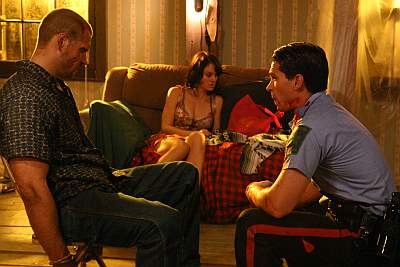
darkheart

9. Dark Heart (left)
Sometimes, the best films succeed on the simplest level: the viewer wants to know what happened next. This movie demonstrates this admirably, a taut piece of work, mostly taking place in a deserted house where an Iraqi veteran is taken, after unwisely shooting his mouth off in a bar about a stash of money. ‘Hilarity ensues,’ as they say. Ok: it doesn’t, but the script is crisp and taut, and that’s the most important thing.

8. Iron Man
I haven’t been too impressed with most films based on comics before this year, but we had a couple of crackers in 2008. This one was simply enormous fun, with Downey a perfect choice for the role, and thoroughly deserving the career resurrection which resulted. Expensive, loud and packed with well-shot action, it was a rare example of a film that really needed to be seen at the cinema to be enjoyed.

7. Chocolate
Though if you wanted your action flavoured with copious amounts of bone-crunching, then you needed to unwrap a bar of Chocolate. From the director who turned Tony Jaa into a star, this starred the catchily-named JeeJa Vismistananda as an autistic girl who learns martial arts off the TV. Long story short: contains probably the most painful large-scale fight scene since Jackie Chan’s heyday. And quite a few others too.

6. Diary of the Dead
After the somewhat disappointing Land of the Dead, Romero got back to form, by going back to basics: a small band of no-name actors, pitted against a large number of hungry zombies. George adopted some of the concepts from Blair Witch and Cloverfield, but reined in the worst excesses, and was more effective than both as a result. Skewering the flesh and the media with equal enthusiasm, nice to see Romero still has it in him.

5. Machine Girl
Trust the Japanese to go and one-up Romero when it comes to the splatter. I can’t do much better than repeat my GWG recap: “For those who thought the Black Knight scene in Holy Grail was just too restrained in its use of arterial spray.” Right from the opening scene, the film was awash in the old red stuff; I think it probably counts as the goriest film I’ve seen since the heyday of early Peter Jackson. Silly, over the top, cheap, lurid and wonderful.

4. WALL-E
When the world seems to have turned against you, it’s occasionally comforting to curl up with a feel-good flick – and no-one does them better over the past decade or so, than Pixar. Be it insects, toys, monsters, fish or, as here, robots, the studio can take almost anything, giving it heart and making you care about it, in a way most human actors and directors would kill for. Great to see them back on form.
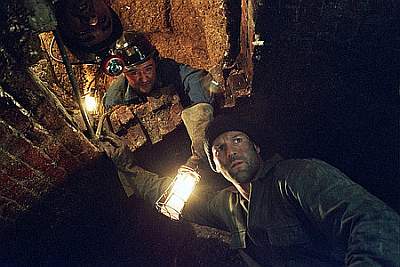
bankjob

3. The Bank Job (right)
Jason Statham had a bit of a mixed year. Death Race was lame, and working with Uwe Boll is never a good sign, though even I haven’t had the guts to sit through the 127 minutes of In the Name of the King. However, the #1 British action hero reached a new career-high with The Bank Job, which deftly spun a tale of a largely-forgotten moment in our country’s history, and gave Statham a chance to do some acting, an aspect of his talent often ignored by all but Guy Ritchie.

2. The Dark Knight
Rarely are commercial success and artistic acclaim so well aligned as here; one does have to wonder, would it have been quite so popular in either, save the untimely death of Heath Ledger? Regardless: it is what it is, and what it is is probably the best comic-book adaptation ever [though I still love Batman Returns on a number of levels]. Ledger dominates the screen in a sweeping epic that has brains, heart and soul, overshadowing even Bale’s caped crusader. If someone had given Batman a throat lozenge, this would probably have been #1.

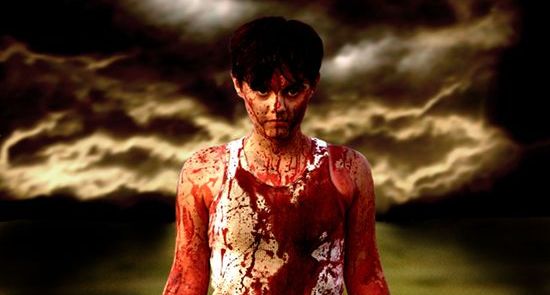
1. Sick Girl
Chris found the trailer for this, and we immediately had to have it for our Film Festival. When we got the DVD, we had some trepidation: surely it couldn’t live up to the trailer? It didn’t. It surpassed the trailer, thanks mostly to Leslie Andrews’ completely disconnected performance in the title role. It’s a film that’s probably highly offensive, simply for daring to make the viewer empathize with a character whose idea of fun includes torture of the most sadistic kind. And we wouldn’t have it any other way.

YouTube Video

TC’s Ten Best Films of 1999-2015

Click on the film names to go to the appropriate review. Clicking on the year may take you to an article about it. Or it may not. Depends entirely on whether I wrote one.

2015

  1. The Martian
  2. Spooks: The Greater Good
  3. Spy
  4. Mad Max: Fury Road
  5. Let Us Prey
  6. Cartel Land
  7. Lila & Eve
  8. Victoria
  9. Sicario
  10. Bone Tomahawk

2014

  1. Gravity
  2. Berkshire County
  3. Raze
  4. Mar Negro
  5. Maleficent
  6. Blood Runs Black
  7. Circus of the Dead
  8. 300: Rise of an Empire
  9. The Battered Bastards of Baseball
  10. Godzilla

2013

  1. Europa Report
  2. The Last Days
  3. Star Trek Into Darkness
  4. Escape (Flukt)
  5. The Attacks of 26/11
  6. The World’s End
  7. Maniac (2013)
  8. Violet & Daisy
  9. GLOW: The Story of the Gorgeous Ladies of Wrestling
  10. Riddick

2012

  1. Skyfall
  2. ACAB – All Cops Are Bastards
  3. Kevin Smith: Burn in Hell
  4. The Raid: Redemption
  5. Inbred
  6. God Bless America
  7. The Holding
  8. Iron Sky
  9. The House With 100 Eyes
  10. The Cabin in the Woods

2011

  1. Four Lions
  2. Hobo With A Shotgun
  3. 36th Precinct
  4. Sucker Punch
  5. Eaters
  6. Darfur
  7. Sint
  8. Dossier K
  9. Rise of the Planet of the Apes
  10. We Are The Night

2010

  1. Shellter
  2. Bitch Slap
  3. You, the Living
  4. La Horde
  5. SexyKiller
  6. The Countess
  7. Mutant Girls Squad
  8. Inception
  9. Harry Brown
  10. The Shadow Within

2009

  1. Martyrs
  2. Princess
  3. District 9
  4. The Machine Girl
  5. Star Trek
  6. Zombieland
  7. The Hurt Locker
  8. Monsters vs. Aliens
  9. Ghost Image
  10. Raging Phoenix

2008

  1. Sick Girl
  2. The Dark Knight
  3. The Bank Job
  4. WALL-E
  5. Machine Girl
  6. Diary of the Dead
  7. Chocolate
  8. Iron Man
  9. Dark Heart
  10. The Gingerdead Man 2: The Passion of the Crust

2007

  1. No Country For Old Men
  2. Red Road
  3. Hot Fuzz
  4. Chasing October
  5. 11:59
  6. 300
  7. Cave of the Yellow Dog
  8. A Flock of Dodos
  9. Grindhouse
  10. The Chambermaid

2006

  1. Children of Men
  2. Borat
  3. The Booth
  4. The Descent
  5. Caregiver
  6. Archangel
  7. Death Becomes Them
  8. Nightmare Man
  9. Boxed
  10. Ultraviolet

2005

  1. Sin City
  2. Kung Fu Hustle
  3. King Kong
  4. Cypher
  5. Cup of my Blood
  6. Azumi 2: Death or Love
  7. Dead Men Walking
  8. The Kiss (Bechard)
  9. Never Been Thawed
  10. Shadow Hunters

2004

  1. Shaun of the Dead
  2. Bloody Mallory
  3. Aan: Men at Work
  4. Noon Blue Apples
  5. Aileen: The Life & Death of a Serial Killer
  6. The Incredibles
  7. Up for Grabs
  8. The Chronicles of Riddick
  9. Kill Bill, Volume 2
  10. House of Flying Daggers

2003

  1. Lord of the Rings: Return of the King
  2. Finding Nemo
  3. The Animatrix
  4. The Returner
  5. Kill Bill, Volume One
  6. Guns & Talks
  7. The Princess Blade
  8. Synthetic Truth
  9. Pirates of the Caribbean
  10. Infernal Affairs

2002

  1. Nine Queens
  2. The Ring
  3. Dead Dogs Lie
  4. Spirited Away
  5. Minority Report
  6. Sum of all Fears
  7. Blade II
  8. Jane White is Sick and Twisted
  9. Signs [the first 90%!]
  10. Equilbrium

2001

  1. Ever Since the World Ended
  2. Monsters Inc.
  3. Versus
  4. Lord of the Rings: Fellowship of the Ring
  5. Boys From Madrid
  6. Memento
  7. Cradle of Fear
  8. Revolution #9
  9. 90 Miles
  10. Ginger Snaps

2000

  1. Run Lola Run
  2. Gladiator
  3. Dancer in the Dark
  4. Crouching Tiger, Hidden Dragon
  5. Beyond the Mat
  6. O Brother, Where Art Thou
  7. Final Destination
  8. Charlie’s Angels
  9. American Psycho
  10. Boiler Room

1999

  1. Last Night
  2. Fight Club
  3. eXistenZ
  4. Who am I?
  5. Bride of Chucky
  6. Drop Dead Gorgeous
  7. Gemini
  8. The Lost Son
  9. Cruel Intentions
  10. The Matrix

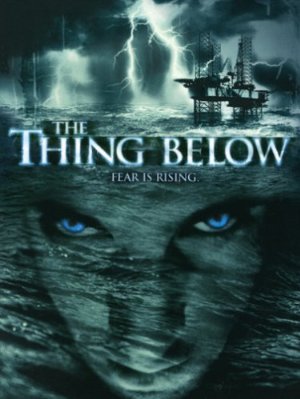
Incredibly Bad Film Show: The Thing Below

Dir: Jim Wynorski [as Jay Andrews]
Stars: Billy Warlock, Kurt Max Runte, Catherine Lough Haggquist, Peter Graham-Gaudreau

I have a lot of time for Wynorski who, along with Fred Olen Ray, is one of the most enthusiastically active B-movie directors in Hollywood, with a career going back to 1985’s The Lost Empire, and which has resulted in such classics – at least in TC Towers – as Deathstalker 2, Chopping Mall and The Bare Wench Project [ok, Chris would disagree with me over the merits of the last-named]. He operates under a range of pseudonyms, including H.R. Blueberry for soft-porn spoofs such as The Da Vinci Coed, with other names including Arch Stanton, Noble Henry, Tom Popatopolous and Jamie Wagner. But the one you have to watch out for, and operating here, is Jay Andrews. This tends to be attached to poverty-row SF/action flicks, often appearing on the SciFi Channel: Komodo vs. Cobra or Gargoyle. Now, ladies and gentlemen, I give you The Thing Below.

YouTube Video

You’ll notice that the trailer provides only brief glimpses of the titular Thing, and that would be for very good reason: it is total crap, being entirely CGI, and apparently constructed using the full computer power offered by a top of the line Sinclair Spectrum [without the 48 Kb RAM expansion pack] A host will open their mouth, a tentacle will shoot out and wrap itself around the victim’s throat. Except, the use of the words “shoot out” and “wrap itself” implies that the tentacle and the actors interact in some way. Please be under no illusions there: you could achieve a better semblance of visual trickery by getting your six-year old nephew to draw on the TV with Crayolas.

The film starts on an US warship in the Gulf of Mexico, where a sample, dug up from an oil-platform, is being returned to shore in a ferocious storm. The scientists in charge, rather dumbly, wait until the height of the gale to try and move the sample – described as so radioactive, it could tan an elephant’s hide, though this is never mentioned again – to a secure location, from the lab counter on which it is currently sitting. Do they, oh, use a dolly or cart of some kind to move it, as the ship heaves through the waves? No: a bunch of guys each grab a corner, and stagger around for a bit, before the inevitable happens. They drop the container, which shatters and the contents starts shooting tentacles out, as if auditioning for the cosplay at a Legend of the Overfiend convention.

Then the ship blows up. Quite why, I’m not sure, but they probably had used up all of their stock footage, and needed to divert elsewhere. Such as the CGI oil-rig where the bulk of the film actually takes place; this does explain the movie’s alternate title, Ghost Rig 2: The Legend of the Sea Ghost. In case you’re wondering, the original Ghost Rig was a retitling of a British film, The Devil’s Tattoo, about an evil spirit haunting a North Sea platform. It was, presumably, successful enough to merit this pseudo-sequel, though since they seem to have abandoned the title, you’d never know.

Heading towards the rig is a supply ship, under the steely gaze of Capt. Jack Griffin (Warlock), along with a scientist, Anna Davis (Haggquist), and company man Rieser (Graham-Gaudreau) – the latter may be a nod to Paul Reiser, who played basically the same role in Aliens. When they arrive, the find the place almost deserted, and soon find out that a creature is roaming the corridors here. It’s never quite made clear whether this is the same one which was on the ship or not; I think it’s probably a second one, but if that’s the case, how it escaped too isn’t explained. As Oscar Wilde once said, “To lose one many-tentacled beast from the depths may be regarded as a misfortune; to lose both looks like carelessness.” Or something like that.

Here, we discover the creature’s other ability: it can project visions into the minds of those near it, to lure them within tentacle strike range. I’m pretty sure this was used in a Star Trek episode. And, say what you like about the monster, it doesn’t lack ambition. The crewman who wants to be a cowboy, for example, gets a whole Western town, complete with an opposing gunfighter. Never mind that this is actually a storm-tossed oil-platform, so any normal person might go “Hang on a moment…”, when they stumble through a door into Tombstone (or a semi-convincing facsimile thereof), instead of the expected store-room. Similarly, another crew member gets a visit from his favourite porn starlet, played by Glori-Anne Gilbert, whose breasts have previously been discussed on this site. A third lost her husband and son in a train crash, so – yep, you guessed it – the entire accident scene gets re-created. Hell, if you’re going to go big, go big.

Gradually, the team is whittled down to the small band of survivors, who are exactly the characters you would expect to survive. They locate a couple of survivors, including Captain Jack’s brother, and there’s a tussle over a floppy disk which contains information on how to defeat the creature. This is questionable in a couple of ways. Firstly, when was the last time you saw anyone copy information onto a floppy disk? And secondly, the method actually used by Jack, seems far more inspired by a recent viewing of Die Hard than anything remotely technological. Sadly, the film lacks the guts to have him intone “”Come out off the coast, we’ll get together with a many-tentacled telepathic fiend, have a few laughs.”

The ending is both eminently predictable, and a complete cop-out in that the creature suddenly decides to develop a hitherto-unmentioned skill – one which, if applied earlier, would likely have resulted in a rapid end to the film. No such luck, however, and we are left to contemplate the horrific possibility of The Thing Below 2 – or, possibly, Ghost Rig 3. So far, however, even Wynorski has not seen fit to go back to that particular well, despite having made 23 features in the four or so years since. Perhaps even he knows when it’s best to let sleeping, ah, things lie.

Despite the copious use of stock footage [some of which is, admittedly, fairly impressive], the film’s cheapjack nature continually shines through. The entire US government is represented by two guys and a Dell computer in a largely-empty warehouse, supposedly in Washington. This is enough to get you the direct-dial number of the President; well, I guess Bush hasn’t got much to do since the election.

If Warlock looks somewhat familiar, it’s because he was the lead in Brian Yuzna’s Society, where he also found himself on the wrong end of an alien species, and I have to say, the acting is probably the least of the film’s problems. While no-one stands out, they all do what they can with the crappy material, especially since one suspects they were acting under false pretenses. Specifically, being unaware that the special FX to be inserted later, were using the term “special” in much the same way as the “Special Olympics.” I can only sympathize with them, so here’s a quick plug for Haggquist’s theatrical and film bookshop in Vancouver. It’s the least she deserves.

Regardless of how you look at this film, there are better entries sitting on the shelves. Alien paranoia? Go for The Thing, which the movie’s title is shamefully invoking. Want tentacles on the ocean? Try Deep Rising instead – which also had far better effects, despite being made six years previously, practically an age in CGI terms. Deserted vessel? Even the crappy Ghost Ship had one good scene. Which would be one more than this manages. But ask yourself a question, folks: how cheap and rushed does a film have to be, before Jim Wynorski won’t use his real name on it?

TV Dinners: The Best TV of 2008

We spent most of the week emptying TV off the Tivo – hence the lack of movie reviews on the site this week. We don’t watch much television, generally. Well, actually we do, but in terms of series we actively follow, rather than randomly pausing on while channel-surfing, there aren’t that many. [A fondness for Discovery Channel’s Destroyed in Seconds – a title presumably used because “Shit Getting Blown Up” was deemed inappropriate – hardly counts] Here are the five shows which were put on permanent record as far as our Tivo was concerned in 2008.

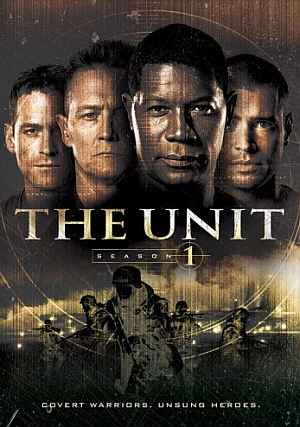
5. The Unit. I am not quite sure how we managed to miss the first three series, but then, we managed to ignore 24 on its initial screening. Life’s too short to watch everything, I guess. It was the realization that David Mamet was the creator which finally lured, first Chris and then me, in: while somewhat variable in the quality of the individual episodes, it has a good enough hit-rate to keep us interested. It’s centered on a special forces group under Col. Ryan (Robert Patric), which engage on covert missions of counter-terrorism, etc. around the world, with all knowledge officially disavowed.

This bears some resemblance to 24, not least the presence of President Palmer (Dennis Haysbert) as the sergeant-major in charge of one of the squads. While some of the stories are rather silly [the one about escorting an Afghani bride to her wedding was not the writers’ finest hour], when they get a good topic, they can generate a degree of tension rarely seen on television. It does an admirable job of generally avoiding stereotypes for ‘the enemy,’ even if there is little or no doubt who the good guys are. If you’re looking for hidden depths, this is probably not the show, yet as straightforward action-adventure in a post-9/11 world, it’s well put-together and executed.

4. Life on Mars. I never saw any of the British version, so I can’t say whether the American remake is better, worse or basically the same. On its own merits, however, it works very nicely, though it did take a couple of episodes for me to warm to the show. Cop Sam Tyler (Jason O’Mara) is in an accident, and wakens to find himself apparently back in 1973 – he’s still a policeman, but it’s a very different world under his new boss, played by Harvey Keitel, in an interesting echo of his Bad Lieutenant role. Tyler has the chance to revisit his own childhood, and address some unresolved issues from his past, but is he really alive in the 70’s or is it all just some kind of hallucination?

Initially, this seemed not much more than an exercise in unabashed 70’s nostalgia, with a soundtrack apparently designed to sell CDs as much as anything. However, Tyler is an endearing character, and it’s easy to see why he behaves the way he does – he loyally refuses to deny the future, causing his colleagues to regard him as eccentric, at best. It’s an interesting study in how much our society has changed over 35 years, in almost every way, and one suspects this holds true for Britain, just as much as America.

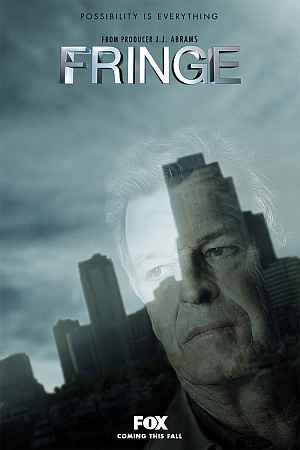
3. Fringe. JJ Abrams has a somewhat spotty track record: Alias used to be a favorite, before imploding spectacularly in the last couple of seasons, and we never got into Lost at all. However, with Fringe, he seems to have returned to form, with a nicely-layered tale of conspiracy, which owes more than a little to early X Files. FBI agent Olivia Dunham (Anna Torv) is assigned to a special group investigating a series of unexplained events, apparently connected in what’s called “The Pattern.” This brings her into contact with mad scientist Dr. Walter Bishop (John Noble) – and I mean ‘mad’ literally, since he has to get bailed out of the mental hospital by his son. There’s also a mega-corporation, Massive Dynamic, who may be responsible for The Pattern, and certainly know more than they’re admitting.

This kind of thing is better suited for a TV series than a movie, where everything has to be wrapped up in two hours. The authors can dole out information more slowly, keeping the paranoia bubbling. Of course, this can’t be sustained forever: eventually, they have to resolve things – that’s where Chris Carter went wrong in The X-Files, and he’s never really recovered. Fringe is no different, but if anyone can pull it off, Abrams probably can. We’ll cross that when we come to it, and in the meantime, just enjoy the show [while looking over our shoulders] and Dr. Bishop’s endearing line in comments: after two decades in the loony-bin, he’s fascinated by the most everyday things, and has little sense of the social niceties. Here’s a typical example: “Oh! I just got an erection… Don’t worry, it’s got nothing to do with your state of undress. I simply need to urinate.”

2. Primeval. Ah, BBC America, how do we love thee. Well, actually, the bulk of the programming appear to involve interior decoration, antiques or Monty Python re-runs [not that there’s anything wrong with the last mentioned, of course], but occasionally there’s a gem, such as this Stargate-like show, in which portals open up, allowing creatures from other times to enter the modern world. Curiously – and presumably due to budgetary restrictions – these only ever seem to appear around the Home Counties of England, but such artifice aside, you can hardly do anything but love a show in which an ancient elephant rampages its way up and down a motorway. Gives new meaning to the phrase “mammoth traffic jam”, I guess…

The idea is broad enough to give an almost infinite range of possibilities, with the animals covering a range from the cute [a flying lizard called Rex, and a flock of dodos] through to the seriously nasty, perhaps most memorably a predator from the future, though the carnivorous worms that appeared in a tower-block also merit consideration there. The creator has compared the show to The A-Team – a curious parallel, yet one I can see, based on the disparate backgrounds of the characters. We particularly love Sir James Lester (Ben Miller) who may be the most sarcastic git on television.

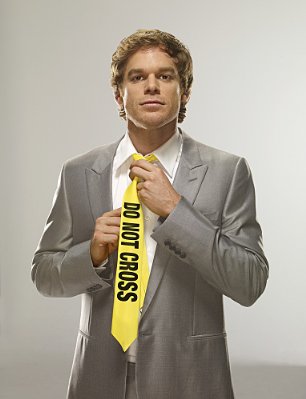
1. Dexter. I read the book on which the series was based a little while back; it’s radically different, with Dexter being a much colder and distant character. I don’t think they could really do the show that way, and the lovable guy we see here perhaps makes things even more subversive. He’s charming, witty, personable… and just happens to have this overwhelming need to kill people occasionally, though has successfully channeled this so that he only kills those who have slipped through the nets of justice. Michael C. Hall is perfect in the title role – I can’t imagine anyone else playing Dexter – and the raft of supporting characters behind them help craft the most unmissable show of the year.

The second season did veer off into some questionable territory, but its third year has returned to full strength. There’s an intriguing premise of a partner in crime for Dexter – and it’s the Assistant DA Miguel Prado (Jimmy Smits), whose brother Dexter killed, albeit in self-defense. While Dexter operates strictly under his self-imposed code, only targeting those where evidence of their crimes is impeccable, Prado doesn’t have the necessary restraint, and is much more volatile, inevitably transforming him gradually from an ally into a threat. The last episode of the series is on Sunday night, and as Showtime have already contracted for the fourth and fifth seasons, it looks like we’ll be following this for some time to come.

Speed Kills: But It’s Extremely Profitable

This is something that I touched upon last week, but was brought back to the forefront of consciousness with the news that, in the first two months of operation, more than 40,000 tickets were issued, purely as a result of the cameras being triggered. Equally staggering, the cameras actually went off more than four times as often – a total of 166,176 times on freeways. Three out of four photos have to be discarded because they don’t clearly show the driver or the number-plate, necessary in order to begin the citation process.

That’s based on sixty cameras [forty mobile, twenty fixed], and would lead to an income of about $6.6 million for the state, if everyone were to pay up at the average rate of $165 per ticket. A nice windfall, especially in a state that is facing a serious budget deficit this year. The system is being run by a for-profit corporation, and the idea that this is about “safety” is given the lie by the fact that anyone caught speeding does not incur any penalty points on their license – they simply have to pay the fine, and nothing else will happen to them. It’s basically a speed tax, and one you can largely bypass if you know whereabout the fixed cameras are located.

As noted previously, the concept of a fixed speed-limit on any highway is entirely ridiculous, because the safe speed on a road is subject to a wide range of variables: time of day, volume of traffic, weather conditions, etc. There are times – and I’m thinking particularly of rain, which seems like an foreign concept to Arizona drivers – when even 55 mph is too fast. But there are others, where the road is entirely empty, when you can go a lot faster without putting anyone else [or even yourself] in jeopardy. Speed cameras have no concept of this; they offer a “one size fits all” approach to justice, which makes as much sense as the laughable ‘zero tolerance’ policy schools have for violence, that results in idiotic concepts such as kids being suspended for playing with a water-gun.

Any inflexible or automated process of law-enforcement is always going to result in this kind of idiocy, because of the difference between enforcing the letter of the law and enforcing justice. The latter is, naturally, harder and requires the presence of actual human to assess the situation and take appropriate action. I am reminded of Demolition Man, where Sly Stallone’s retro-cop is automatically fined every time he uses bad language – which happens about once every five seconds. It also makes me fear that the United States is going the same way as the United Kingdom, which I was fortunate enough to leave before the closed-circuit cameras became omnipresent.

Inevitably, the same arguments are being used here: “If you don’t break the law, you’ve got nothing to worry about.” Of course, you can extend the concept as far as you want to go. Hey, let’s put a camera in your bedroom, shall we? After all – all together! – “If you don’t break the law, you’ve got nothing to worry about.” Once the basic principle has become established, and the public has become comfortable with it, then it becomes a lot easier to take the next step. We’ve already seen this with GPS devices being placed in cars, in case of an accident or theft. However, you can now get the same thing for your kids, or elderly relatives who might be liable to wander off. How long before they become [at first, anyway] optional accessories for all adults, just to be safe?

This probably seems like paranoid thinking, but I recall thinking much the same about those who predicted that cameras would be observing our every act. George Orwell probably got the much the same reaction for 1984, and I suspect he was exaggerating what seemed plausible to him for literary effect. Seems that reality has done a very effective job of catching up on speculative fiction.