Titanic: An Immersive Voyage
Galleria Centre, Scottsdale
July 23rd, 2026
There have certainly been bigger nautical disasters than HMS Titanic. The wartime sinking of the Wilhelm Gustloff resulted in the loss of over nine thousand lives, roughly six times as many. But none has made such an indelible mark on pop culture. Purely in the cinema, there have been dozens of films based on or inspired by it. The first came out less than a month after Titanic sank, and starred actress Dorothy Gibson, who was actually a survivor of the event. Most famously, of course, is James Cameron’s Titanic, which remains the second-biggest movie worldwide, almost thirty years after its release. Tapping into this interest, an exhibition recently opened in Scottsdale, promising to “tell the story of the RMS Titanic like never before.” So, does it?
On balance, yes: I think it does. It’s certainly an interesting exercise in a multi-media experience, located in the same building where Beyond Van Gogh: The Immersive Experience operated (the steps still reflect the previous occupant). That was visually pretty, but didn’t offer much. This takes you through the history of HMS Titanic, from its design and building in Belfast’s Harland & Wolff shipyards, through setting sail from Southampton in unprecedented luxury, to that fateful encounter in the North Atlantic with an iceberg which sealed its place in history. Nobody really remembers its sister ship, the Olympic, which was basically the same in size and luxury. It sailed for 24 years, largely without incident – except ramming and sinking a U-boat in World War I.
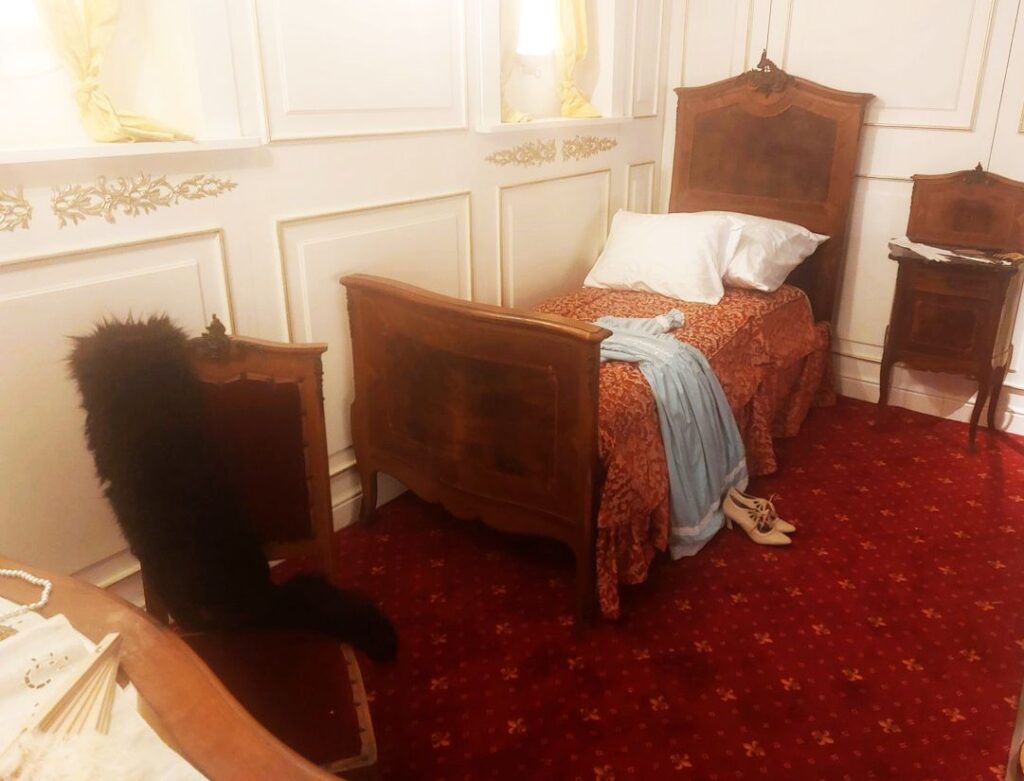
All of this was interesting to me, because my knowledge prior to going into the exhibit was almost entirely limited to what I gleaned from Cameron’s movie. Once I realized there was not going to be a “Nekkid Kate Winslet” room, I was able to settle in and learn some things. I was particularly impressed by the recreations of various parts of the ship, including the bridge, the radio room and some of the cabins. Though I must say, they last-named weren’t quite as luxurious as I expected. I mean, the one pictured above isn’t bad for third-class. Oh, hang on: it’s actually a first-class cabin. My mistake. The real third-class one? A series of bunk beds, which looked more like something you’d see Charles Dickens describing as the accommodations in a workhouse.
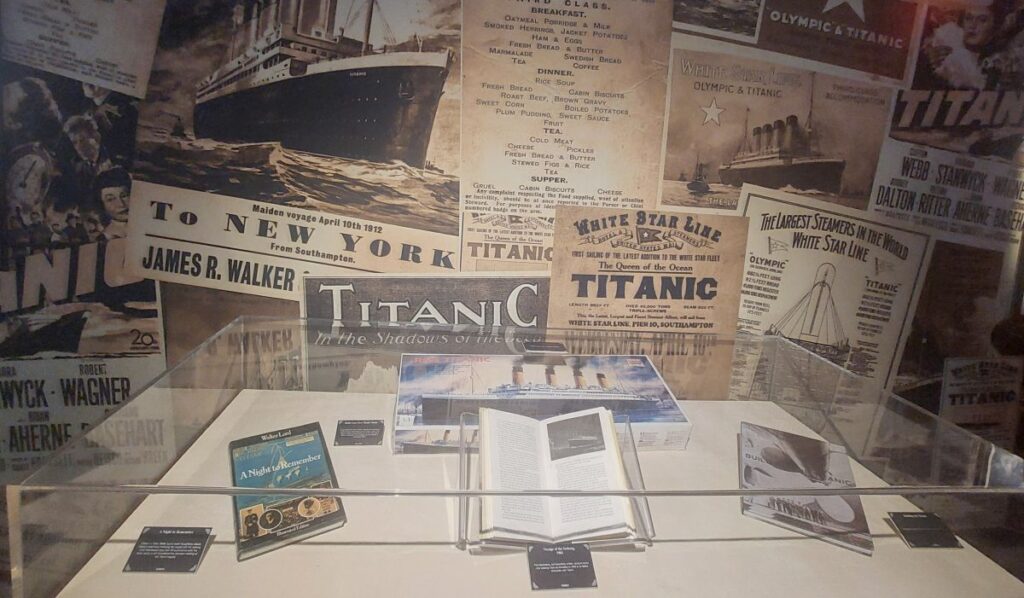
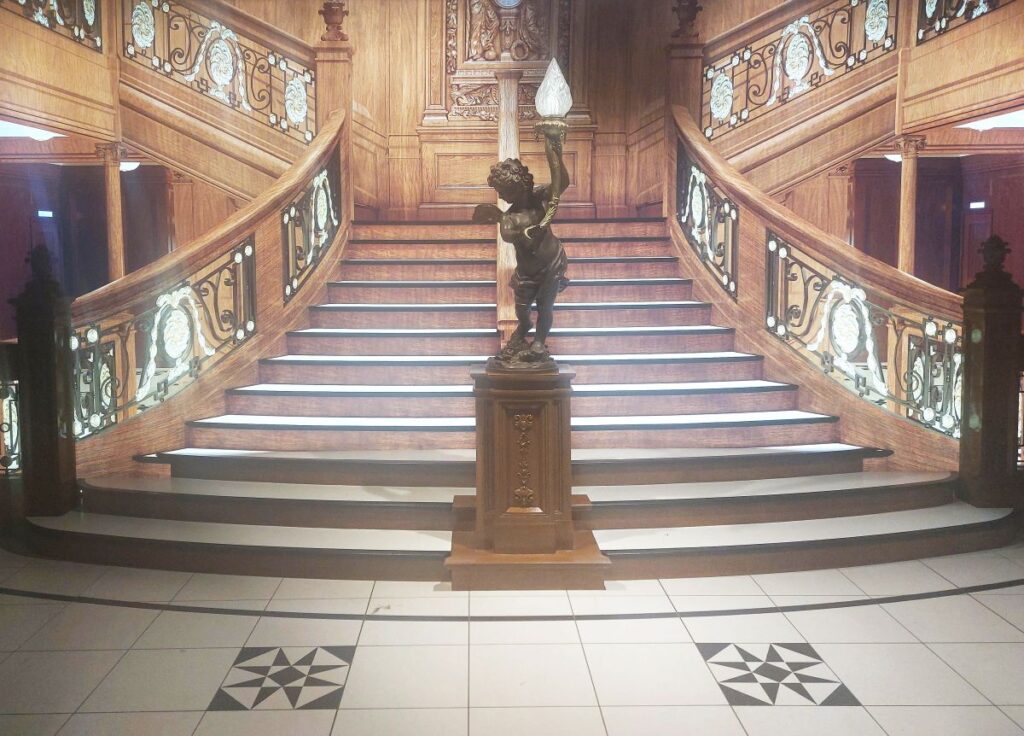
Still there was no shortage of luxury on display, with a slew of artifacts. My one gripe is that it was often not clear what the provenance of these was: genuinely from the Titanic, sourced from another White Star liner, or a reproduction in some way? There are also only so many cut-glass goblets at which you can look anyway. I was, however, impressed with the recreation of the ship’s staircase (below), a feature which is well-known for its appearance in Cameron’s film. It looked absolutely real, though only the first three steps were actually physical, the rest appearing through a trompe l’oeil process which gave the illusion of depth. Fun fact: no photos of the Titanic‘s staircase remain. Everything is based of pictures taken on the Olympic.
Then, the iceberg hits the fan, and things get real, fast. This begins with a view from the crow’s nest, high above the decks, and you realize there was hardly any warning before the impact or a chance to change course. The irony is, a head-on collision might have been more survivable: as it was, a spur on the iceberg tore along the side, opening the vessel up like a can-opener. Thereafter, as you continued to walk through the corridors of the ship, video panels show water inexorably rising through the decks, and… Well, you probably know the rest of the story. But this likely brought us to the most memorable part of the whole experience: a nearly-dark room, in which you could sit in a life-size replica of one of the lifeboats.
The room’s walls were LED screens, on which was projected the slowly sinking boat at massive scale. On top of this were the increasingly concerning messages sent between the Titanic and the other boats in the area, as the disaster unfolded. I felt a genuine sense of helplessness, as the radio transmissions played out, before fading to silence with the boat breaking in two, and going to its watery grave. Though if I had been running the show, I would a) have cranked the air conditioning way down in the room, to reflect the cold of a North Atlantic night, and also installed misters to make the experience even more realistic. Probably would need some significant waivers for attendees though.
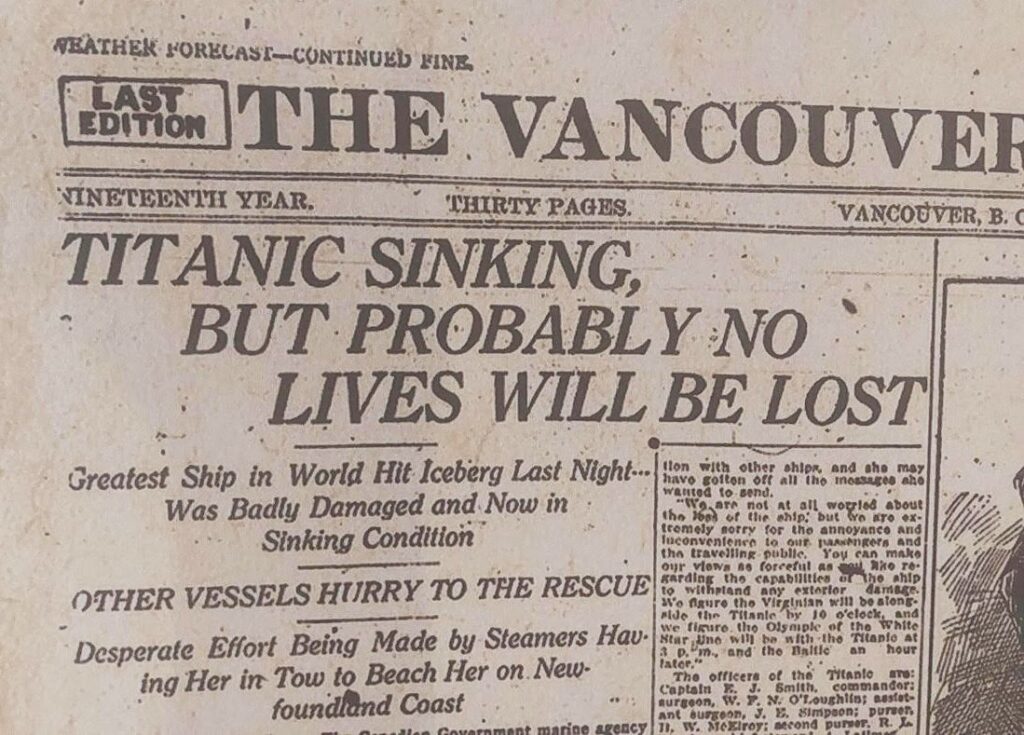
The aftermath is also covered, with coverage from the breathless to the implausibly optimistic (above). Then it was time to enter the gift shop. Yeah, I will confess that did seem a little tacky in some ways. What better way to commemorate the deaths of fifteen hundred people than with a snow globe! Still, I guess everyone needs to make ends meet. And I must confess, we did get far more amusement than I will admit, playing with the camera which took a photo of you, then “dressed” you up as a passenger or a member of the crew. No, I will not be including any of them in this article, but thank you for asking. There was also a VR experience for an extra $10, in which we did not indulge. Reports on it were highly positive though.
Finally, a feature which I did like was, each visitor was given a ‘boarding pass’ for one of the people on the ship, either passengers or crew. At the end, there was a touch-screen terminal where you could discover whether the person you represented had survived or not. Maybe just coincidence, but everyone in our group of four perished. Mine was for a young man from the Channel Islands who was emigrating to Minnesota. He paid ten pounds, ten shillings for his second-class ticket, which is about the equivalent of twelve hundred pounds in modern money. I thought this little gimmick did create a sense of personal connection to the passengers, and I was a little sad to discover he didn’t make it.
Ticket prices vary quite significantly based on the day of the week, starting at about $21 for an adult on Wednesday, going up to $32 on the weekend. I suspect it’s also much busier then too: we went on a Thursday evening, and it was very chill, which was just what we wanted. Probably took us about 75 minutes from entry to exit – so, about two hours shorter than the movie – and I felt it was decent value for money. I would say it did a good job of balancing education and entertainment, and avoided leaning too much into the sentimental. I’ll be thinking twice before booking any cruises, put it that way…