Why Ticketmaster Sucks

Ok, we’ve had enough. Largely by chance, we discovered that Henry Rollins was doing a spoken-word show in Tempe on Monday – since a cousin is visiting from Australia, we aren’t able to go to the box-office, so visited ticketmaster.com in order to pick up tickets. Four tickets at $20.75 = $83.00, right? Not by Ticketmaster’s math:

  • Face Value: 20.75
  • Building Facility Charge: 1.25
  • Convenience Charge: 6.75

Total cost = $115, including $32 in total charges, an almost 40% surcharge. And that’s not even including the $2.50 they’d charge, had I wanted to print the tickets out on my own computer – using my own paper and ink. Are they taking the piss? Apparently not. This is part of the reason why they are widely referred to as Ticketbastards.

No-one would argue that they are entitled to cover their costs and make a reasonable profit, but what they are doing goes well beyond both. It’s both ludicrous, and entirely unjustifiable, not least because the charges are arbitrary. For a Merle Haggard concert, the add-ons are $2.00 and $8.25 – that’s at exactly the same venue, so why is the “building facility” charge different? And why is it suddenly $1.50 more ‘convenient’ to buy Haggard tickets than Rollins ones? Is there some hidden expense associated with the former? No – the only difference is the face value, and hence how much money Ticketmaster can gouge out of the buyer.

Unfortunately, these days Ticketmaster are an unstoppable behemoth. Complaints about their behaviour go all the way back to at least 1994, when Pearl Jam cancelled a tour as part of their battle with the company. It serves as a nice illustration of how the company operates, and why it has become such a monster.

It started when Eddie Vedder and his mates objected to Ticketmaster adding their (strangely variable, but even back then, extortionate) fees to concert tickets, whose face value had been kept deliberately low at $18. A couple of dates in, after selling tickets through other means, they discovered that across the country, Ticketmaster had a monopoly on sales at a lot of venues, and was enforcing it aggressively. For their compliance, the venues, on their part, got what can only be described as “kickbacks”, funded by the service charges. These were sometimes as much as $500,000/year, in addition to what Ticketmaster paid them up front for the monopoly. Little wonder places have no interest in exploring other avenues.

Equally as bad, the company also had exclusive contracts with promoters, locking them in with Ticketmaster. So even at an independent venue, if the event promoter is contracted with Ticketmaster, the result’s the same. In the end, the problems proved too much for Pearl Jam to overcome, and the tour was cancelled, costing somewhere around $3m. They complained to the Justice Department, and two members, Jeff Ament and Steve Goddard, testified before a House Committee that Ticketmaster were a monopoly bent on eliminating competition. Aerosmith’s manager testified too, saying he had no choice but to use the company, even though he hated doing so.

In 1995, the Justice Department decided against investigating Ticketmaster; Pearl Jam became Ticketmaster’s bitches, and since then, things have got worse. Much worse. Ticketmaster has gobbled up competitors such as Ticketweb, to such an extent that in 2000 it was estimated that the company controlled 90% of the market, and in 2001, they sold $3.6 billion worth of tickets.

Another part of the problem is their “exclusive agreement” with the very worst of the media companies, Clear Channel, through the latter’s SFX Entertainment subsidiary. This cosy cartel of venues, promoters, and the media means the chances are slim of you hearing about any other means of getting tickets – especially if you listen to one of Clear Channel’s 1,200 radio stations, which control 60% of all rock programming in America.

[As an aside, in August 2001, Nobody In Particular Promotions sued Clear Channel charging it “used monopolistic, predatory, and anticompetitive practices to prevent NIPP and others from offering concert promotion services in that area.” The irony is, guess who owns the venue Henry Rollins is playing at – which is just down the road from where Ticketmaster started? Yep: Nobody In Particular Promotions.]

This August, String Cheese Incident were the latest to suffer. They sued Ticketmaster, frustrated because the company refused to let the band sell tickets direct to their own fans. They were unable to play in San Diego, because every appropriately-sized venue was exclusively tied up. See Pearl Jam for details, boys – the band may have changed, but Ticketmaster’s tune remains the same: “We’re in the Money”.

The company now have exclusive rights to 90% of the nation’s large arenas, and over 70% of the clubs and theatres. This pretty much allows them to charge whatever markup they want – and as the example at the top of the page shows, they take full advantage of the opportunity. It’s interesting to note that Ticketmaster get their claws in at both ends. If they sell your band’s tickets, they charge 3.5% commission on gross sales, plus a further “administrative fee” for credit/debit card fees. The latter is particular interesting, removing wholesale one potential justification for what they add to the price of a ticket.

As if gouging in this manner weren’t enough, in September the company announced plans to auction off the best tickets to the highest bidder – effectively becoming nothing more than touts, driven entirely by market forces. The worst thing is, laws against scalping are ineffective, since they apply only to the resale of tickets, not the initial purchase. Again, they’ll be laughing all the way to the bank.

Paul Allen – Owned not
one, but two companies
loathed by millions…

I’m a huge fan of the free market – but for a truly free market, competition is absolutely essential, and is conspicuously absent in this field. It’s difficult to see how Microsoft is a monopoly, but Ticketmaster isn’t – the latter deserve investigation equally as much. [Interestingly, Paul Allen, co-founder of Microsoft, was at one point the main Ticketmaster shareholder] The arrogance, selfishness and greed they display leaves me wishing they get splintered into a thousand pieces for their dubious business practices.

Downloading may or may not be killing CDs, but the leech which is Ticketmaster drains the vitality out of live entertainment just as badly. Most people don’t have an unlimited budget, and these hefty “convenience charges” inevitably mean fewer events will be attended. Ticketmaster have certainly succeeded in making us think twice about what concerts we go to.

Feedback

Cliff Dickinson: “I just want to thank you for the article and links you have posted concerning Ticketmaster’s schemes. I only wish there was a way to warn more people of their rip-off tactics before they buy. Here’s a copy of my note to their customer service email-box. Fat chance of it getting anywhere with them…”

“I purchased two tickets to the Cher concert last night in Daytona. The start time for the concert, printed on the ticket and published on your website was 7:30 PM. We rushed to get there after work. The show did not start until 9PM. We learned from the Event Director that Cher’s contract stated 9 PM start time. We also learned that Ticketmaster recieves a commission from Centerplate for concessions. Sounds like Ticketmaster has a problem with the truth. I paid a $25 “convenience fee” to get these tickets plus a $5 fee to get to print them out on my printer, on my paper. Then to top it off Cher played for 1 hour and 18 minutes. Thus, we spent more time sitting, with no act or entertainment than the combined opening act & Cher’s concert. That’s hardly what we had in mind for a great concert. Ticketmaster is responsible for a lot of frustration for my wife and me last night. Unless, Ticketmaster resolves this matter with us, I will make it a policy in our household going forward that, if we cannot buy tickets directly from the event location or somewhere other than Ticketmaster, we will not go. I look forward to your response.

Further reading

Ticketmaster Customer Experiences

2003: Cinematic Hits and Misses

In which we finally found the
answer to the question,
“What Is The Matrix?”

“Who cares?”

Saw six of the top ten grossing movies in 2003 – as is traditional, the success of most of the rest left me shaking my head at the interests and desires of the average American cinema-goer: Bruce Almighty, Chicago, Bad Boys II, though I might catch Elf eventually. At least Bruce and Elf were original ideas, something hugely lacking this year. If we look at the top twenty films, three-quarters were sequels, remakes or adaptations. Perhaps we should let Return of the King off with a caution, even if it falls into two of those categories. 😉

Perhaps the biggest news was the way the Matrix franchise crashed and burned, from a position at the start of the year as the most-bankable thing in Hollywood. Truth be told, Revolutions isn’t that bad, but was largely scorched by the huge disappointment which was Reloaded. Despite the success of Lord of the Rings, studios might well go back to making most movies one at a time, then waiting to see whether the audience actually wants more.

There were several other cases this year where the audience stayed away: the Charlie’s Angels, Tomb Raider (left) and Fast and the Furious sequels all underperformed. But X2, Spy Kids 3-D and Scary Movie 3 did well, so sadly, we can’t proclaim the quick cash-in dead. Save X2, it was a poor year for comic-book movies: Daredevil disappointed, The Hulk collapsed after a strong opening, while LXG ranks amongst the year’s top turkeys. 2004 brings Spiderman 2, which looks a good bet, but the prospects for Hellboy are much less certain.

Outside of Hollywood, the usually-reliable Phoenix Film Festival, which produced two top ten entries in 2002, didn’t manage anything of especial note – we hope for a return to form in 2004. The main source of interest this year was Korea: while Guns & Talks was the best, My Wife is Gangster and Attack the Gas Station! are also worth watching, and animated feature Wonderful Days currently lurks in the unwatched pile. Hong Kong had a bit of a return to form, Infernal Affairs just beating Double Vision in our view, and making a worthy Oscar contender.

Here’s our top ten choices for 2003:

#10 – Infernal Affairs. The most solidly-acted movie to come out of Hong Kong in a while, thanks to Andy Lau, Anthony Wong and Tony Leung. A lot of effort is put into building tension, and it really pays off with the end result likely to leave you with a good working knowledge about the edge of your seat.

#9 – Pirates of the Caribbean. Bloated, excessive, mammoth. In other words, a perfect popcorn vehicle, whose appeal rests largely on Johnny Depp’s wonderful performance (he can collect the TC 2004 Best Actor, should he ever be in Arizona). He resurrected the previously-dead swashbuckler genre single-handed.

#8 – Synthetic Truth. Okay, I’m (heavily) biased. And Lord of the Rings it isn’t. But for $3,000, you won’t see a better hundred minutes of cinema this year – despite my performance! An early prediction: the 2018 Oscar for Best Director goes to… Zachary Yoshioka.

#7 – The Princess Blade. Possessing swordfights almost the equal of Kill Bill, courtesy of Donnie Yen’s fight choreography, this also had an excellent scenario, its futuristic setting contrasting nicely with the samurai characters. Undeniably Japanese in style, yet easily accessible to a Western audience.

#6 – Guns & Talks. Okay, this was technically released in November 2002, but is simply too good to leave off. Never has the life of a hitman been so appealing – assassins are people too, y’know. An inferior Hollywood remake is probably inevitable.

#5 – Kill Bill, Volume One. If you’d told me a Quentin Tarantino film would be in my Top 10, I’d have laughed. But this one fully deserved it, even if, in truth, it was only half a movie, with the most arterial mayhem seen on screen for a long time. Roll on Volume 2!

#4 – The Returner. Proof that the best wine comes in old bottles, this offered some lovely twists on The Terminator and The Fifth Element, with better characters than either. Add plenty of style, and a great villain too; the end product was simply highly entertaining.

#3 – The Animatrix. 2003 will not go down as a banner year for the Wachowskis; they should probably have stopped with Animatrix, which had far more depth and imagination than Reloaded and Revolutions combined. Beautifully animated, with every part leaving you wanting more, unlike the live-action films.

#2 – Finding Nemo. Walt who? If there was any doubt over who’s the #1 American animation studio, this dispels it, thanks largely to Ellen De Generes giving the best female performance of the year as Dory, the short-memoried fish with a heart of gold. Perfect animation, great characters, wonderful writing.

#1 – Lord of the Rings: Return of the King. You’ll laugh, you’ll cry, you’ll sit with jaw agape. Countless man-years and $300m in the making, with every minute and penny fully justified by this climax to the trilogy. This raises the technical bar for every other movie, while not forgetting that it’s the people (and elves, dwarves and hobbits) that count.

What are we looking forward to in 2004? Nothing pre-dominates in the way that Matrix and LotR did for 2003. Looks like more sequels are in order, but some might actually be worth our time. In no particular order: Kill Bill, Vol. 2, The Chronicles of Riddick, Van Helsing, Alien vs. Predator, Resident Evil 2, Ultraviolet (about vamps, but nothing to do with the C4 series), Constantine, The Day After Tomorrow, Blade: Trinity and The Incredibles. Some of these will suck. 🙂 And speaking of “suck”, file under “wild horses”: Shrek 2 and Scooby-Doo 2

  1. Lord of the Rings: Return of the King
  2. Finding Nemo
  3. The Animatrix
  4. The Returner
  5. Kill Bill, Volume One
  6. Guns & Talks
  7. The Princess Blade
  8. Synthetic Truth
  9. Pirates of the Caribbean
  10. Infernal Affairs

Ticket Reservations

I often get asked if I miss anything about Britain. The answer is, not really. Sure, there’s minor stuff like Stella Artois, which is sold in California but not Arizona – and courtesy of the 21st Amendment to the Constitution and state law, customers are not allowed to directly import alcohol, even from another state. But it’s hard to be miffed when Pilsener Urquell is available in the local supermarket.

There is one tiny thing, however, in which Phoenix lags in the dark ages behind London: selling tickets to the cinema. Two words sum up the difference – “reserved seating”. Especially for popular films, this means that there’s no need to turn up hours in advance, since your ticket has a row and seat on it. You know where you will be; you know there will be enough room for your entire party. Life is good.

Here in Arizona – and, indeed, most of America – the law of the wild west still applies. The prospector who arrives first can stake a claim to as much territory as they can grab, using coats, rolled-up newspapers, food trays, animal corpses, whatever. They then must fend off predatory late-comers until their friends arrive to occupy the seats. “Sorry, those are taken” becomes a mantra heard only slightly less often at the movies than “Do you want popcorn with that?”

The worst venue, by far, is the Cine Capri, which is the largest screen in Arizona, and so the first choice for truly cinematic events. We went twice, and our second experience was so unpleasant, we vowed never to go back again. We were made to queue outside in summer for 30 minutes – and in Arizona, no-one, save illegal immigrants and prisoners, does anything outside in summer. Worse still, we weren’t even allowed to visit the concession stand to get a drink.

After a six-month boycott, we were finally lured back by the prospect of Return of the King, but things hadn’t improved any. We arrived 45 minutes before showtime, and the choice of seats was already very limited: this was for a screening at 9 o’clock on Sunday morning. When we left, people were already queuing up for the next screening, which didn’t start for more than another hour and a quarter. If there was a point to buying tickets in advance (especially one worth paying the “convenience fee”!), it escapes me. Memo to Harkins Theaters: forget it. The Cine Capri is nice, but it’s not that nice.

The weird thing is, cinemas are pretty much the only venues still in the dark ages. Go to the theatre, a concert, a sporting event, and you have to sit in the right seat, so it’s not as if Arizonans are unable to grasp the basic concepts. It is simply down to greed on the part of cinema owners. The longer customers spend in the place, the more likely they are to spring for a $3.75 cup of flavoured fizzy water, and that’s where the profits are made, with a 6-800% markup. [An example: in one year Hollywood Theater sold $26.7m in concessions, $22.4m of which was profit] Customers also have to endure more of the “pre-show entertainment” – that’s cinema-speak for “commercials”.

However, they are shooting themselves in the foot, long-term. Having to turn up an hour early, and guard seats like a lioness with her cubs is stressfully unpleasant. And the less pleasant the experience, the less often we will go, reserving the cinema for truly special movies. After all, there’s never any problem getting a great seat in our living-room…

The Tooth Hurts, Part 2

Previously, I’ve written about my dental trauma, following an encounter with a particularly malevolent slice of pepperoni pizza. Almost one year to the day later, I was ambushed once more. Yet again, the enemy was not hard candy, beef jerky, walnuts or pork scratchings – this time, it was the soft, gently yielding dough of a keema naan. As before, I bit down, heard a crack, and felt a hole, this time in an upper-right molar, where no hole has any right to be.

Two teeth down, 30 to go – at that steady rate of (literal) decay, by the year 2033, I’m going to have no teeth left at all. Since I’ll only be 67 at that point, this was a little worrying. And worse was to come; a check-up revealed no less than six other teeth in need of filling. Two sessions would be required to do all the work necessary – one for the left side, one for the right. I feel wronged by this, having brushed my teeth religiously every single day, and can only blame my frequent consumption of fizzy pop. Diet or not, it’s still clearly capable of rotting your teeth…

Sonja, our dentist, is pretty much as caring and sympathetic as one could wish for. Chris tells me that after an appointment with our daughter, Sonja was reduced to tears. “She’s so brave!” sniffled the white-coated one, as Emily’s lip quivered courageously. But it doesn’t matter how sensitive she is, I still hate the bitch. Nothing personal, of course: it’s just a Pavlovian reflex, the inevitable result when every encounter with her leads to pain and suffering. Just like my high-school girlfriend, in fact. Except with less poetry. And a diet of soup…

The weirdest part of the first session was when they stapled some kind of rubber sheet to my palate, for reasons I was unable to ask about – mostly because they’d stapled some kind of rubber sheet to my palate. After 90 minutes of having that, dental tools and fingers crammed into my mouth, I felt like Jenna Jameson after a particularly strenuous shoot. You hear about people who claim to have had radio devices implanted inside their teeth – I think Sonja had enough equipment in there to install an entire station, DJs and all.

I’m now partway through the torture: four fillings down, two to go, so the worst should be over. Certainly, hard to see how it could be much more unpleasant. However, I did hear the two words that strike more fear into dental patients than perhaps any others: “r**t c*n*l” – I dare not speak its name in full, for fear of bringing it on. One of the fillings was so deep, it ended up being a cap, pending crowning when the dental insurance finally kicks in. Even that might not do it, hence the possible need for an R.C.

Hang on, that’s three teeth down in 13 months – bringing my projected age of toothlessness down to a revised figure of 49. Ulp. That’s why part of my psyche is whispering maliciously that this is just the thin end of the wedge, as far as my body falling apart is concerned. Wonder how long it’ll be, before those spam emails I receive daily, advertising ‘V_IAGRA’, are no longer deleted without a thought? 🙁

Sonia said to call her if there was any throbbing or aching – however, she was somewhat vague on how to separate this from the throbbing or aching caused by getting three fillings and a cap in one session. Or the subsequent throbbing/aching whenever I eat anything more than five degrees above or below room temperature. The good news is, this seems to be subsiding nicely, in time for the holiday season to mean more than mashed potatoes and gravy. Though it would give me a good to excuse to avoid the fruitcake – not that any is ever really necessary there…

HAARP-ing On

Up until the 1980’s, Sedona was just another northern Arizona town, set in a picturesque location among impressive formations of red rocks. Passing tourists and the odd film shoot (The Angel and the Badman) provided minor sources of income, while agriculture remained the main pursuit. However, in the 1980’s, a whole new group of visitors arrived, enticed by Sedona’s vortices. Or vortexes – like most things related to them, there’s no real agreement on the matter.

Indeed, you’d be hard-pushed to find two people who agree what these vortices are. Generally, they seem to be areas of increased energy, which can be felt by the especially sensitive – cynics may suggest this is just a nice get-out clause, allowing any failures to be blamed on the participant. From this humble beginning has spun off an entire industry of tours, seminars and New Age activities, which has turned Sedona into a Mecca for the spiritually-minded. Now, anywhere between 2 and 4 million tourists visit a year, swamping the year-round population of barely 10,000.

We are not equipped to comment on the vortices, since we’ve never bothered to hike our way to their supposed locations – with an appalling lack of consideration for tourists, there are no vortices located on Main Street, or near to Starbuck’s. Sedona does, however, remain a cutesy little destination that’s an inevitable stop on the itinerary of visiting guest, as well as the occasional weekend getaway for Chris and myself. It seems like every second shop is an art gallery – with the ones in between occupied by gift shops or new age stores, selling crystals, psychic readings, aura cleansings and the like.

Coming out of one such, we were grabbed by a guru who demanded, “What’s the connection?”. Connection? Ah, spiritual. Now, Chris is from New York, and I spent a decade in London, where strangers only talk to you if they want cash. This guy seemed more benign, though he may have been angling for business. He said we both need exercise – hardly a stretch, and true for 90% of Americans. I need to watch the water I drink, Chris should get her acupuncture points adjusted. Maybe she can do it at the garage, when she takes the car in for a service.

It wasn’t all holistic fun and games, however – the main purpose of the Sedona trip was to hear a talk by Dr. Nick Begich. We first encountered Begich at the 2002 Conspiracy Con, and he remains one of the best speakers we’ve heard in our three years attending that event. It says something that a ninety-minute drive to hear him once more, was absolutely no discouragement at all.

Dr. Begich differs from many conspiratorial researchers in a couple of ways. Firstly, he cites sources with a zeal that borders on the obsessive, yet is refreshing – compare and contrast Arizona Wilder, whose claimed experiences are her only evidence. Secondly, too many conspiratologists take a fact and run amok with it, ending up in wild speculation. Begich is happy to admit the limits of his knowledge, and differentiates between knowledge, inference and extrapolation.

His family background is interesting: his brother is the mayor of Anchorage, Alaska and he’s the son of an Alaskan Congressman who disappeared, along with his plane, in mysterious circumstances – also on the vanished aircraft was House Majority Leader Hale Boggs, a member of the Warren Commission which investigated the assassination of Kennedy, and announced that Lee Harvey Oswald acted alone. Begich entered the fray with a 1994 article about the hi-tech HAARP project located in a remote area of Alaska, a topic later explored more fully in his book, Angels Don’t Play This HAARP.

The HAARP array in Alaska [click picture to enlarge]

HAARP stands for ‘High Frequency Active Auroral Research Program’, and was originally developed as a way to use some of the Alaskan gas there, rather than needing to transport it elsewhere. It consists of an array of radio antennas, pumping large amounts of energy into the upper atmosphere, in what is officially “a scientific endeavor aimed at studying the properties and behavior of the ionosphere.” The fact that it’s run by the Air Force Research Laboratory and the Office of Naval Research tells you this is no theoretical research project, though the only practical applications officially admitted are in communication and navigation systems. Progressing roughly from the mundane on out:

  • Communications. When energy is pulsed into the ionosphere, it resonates like an aerial, emitting ELF (Extra Low Frequency) radio waves. These can be used to communicate with submarines, removing the need for the enormous underground systems otherwise needed to generate the ultra-long wavelengths required.
  • Earth-penetrating tomography. These ELF transmissions are good for submarines, since they go through just about anything. This also allows them to be used in the same way as radar, except detecting underground facilities such as missile silos or bunkers. In the civilian sector, they may also assist in locating buried deposits of minerals, oil or gas.
  • Anti-satellite weaponry. When the ionosphere is heated, it expands, pushing out into space beyond the normal limits of the atmosphere. Encountering particles where there is normally only vacuum would be a nasty shock to low-orbiting satellites, possibly causing them to malfunction or even burn up.
  • Changing the weather. Altering the ionosphere may affect the jet-stream, the high-speed winds which are part of the Earth’s weather systems. Though officially denied, it’s clear from the inaccuracy of forecasts that our knowledge in this area is rather less than perfect. Prodding a chaotic system such as the ionosphere might lead to problems that would make the ozone hole look like a cake-walk.
  • Causing earthquakes. ELF frequencies have also been associated with earth tremors; researcher Dr. Elizabeth Rauscher-Bise has suggested they might be an indicator of imminent seismic activity. It’s really pure speculation, but perhaps pumping ELF into a fault line could trigger a quake. It might be informative to try and correlate HAARP activity – it is officially only “on” a few times per year – with geological records.
  • Behaviour modification. The politically-correct term for “mind control”…

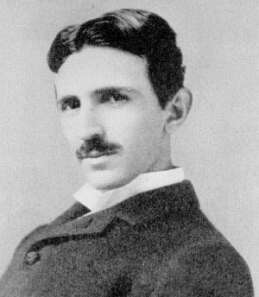
The last-named deserves – and requires – a longer explanation, and a diversion into the realm of electromagnetic weaponry, which may be as much a revolution in armaments as the invention of gunpowder. An earlier pioneer was Nikola Tesla (left), who worked on various devices in this field as well as particle-beam weapons; some suggest one experiment caused the still-mysterious Tunguska Event of 1908 which levelled half a million acres in Siberia, but didn’t leave the crater typical of a meteor impact. After his death in 1943, all Tesla’s papers were seized by the U.S. government.

The human body is susceptible, in one way or another, to a wide range of radiation: ultraviolet rays lead to sunburn, gamma rays cause cancer, and so on. More subtle is the potential impact on the brain: in December 1997, a sequence of flashing lights in a Pokemon episode landed 600+ Japanese viewers in hospital with an epilepsy-like syndrome [thousands more claimed some effects, but mass hysteria is likely responsible for most of these]. This shows that the right frequency of stimulation is more important than the power.

Another example is cellphone radiation. The jury is out on whether the energy levels there pose a threat to users’ health but, either way, information on the topic is hard to find. Emission figures for each model tend to be locked deep within the instruction manuals, sealed in the box, rather than anywhere that’d let consumers make an informed decision. After the lecture, Chris enquired at four local stores on the topic – three were unwilling to help at all (T-Mobile were particularly hostile), with only Digitell providing assistance. Hardly the behaviour of an industry with nothing to hide.

In a showy but undeniably impressive 1964 experiment (right), Dr. Jose Delgado stopped a charging bull using a transmitter connected to a receiver surgically implanted in the beast. This was reported in his book, Physical Control of the Mind, where he also called ethical objections to physical mind-control, “debatable” [p.214]. Without such moral qualms as a hindrance, one can only guess what progress has been made in classified research during the forty years since this open demonstration.

Admittedly, there could be benefits to come out of this area as well. A better understanding of how the mind works, and ways of changing it, could lead to improved methods of alleviating mental illness. Or perhaps we could treat ADD-affected children by methods other than pouring a cocktail of pharmaceuticals down their throat. But the possibilities for abuse need hardly be spelled out, beginning with trivial examples such as a vending machine which could ‘beam’ an advertisement into the heads of passers-by – again, we can speculate what the military have done with this technology.

HAARP fits into this, because the ELF frequencies which it generates in the ionosphere are around the same ones found in the human body, and can impact it. Dr. Rauscher found that a certain frequency could generate nausea, while another triggered laughter. She once reportedly said, “Give me the money and three months, and I’ll be able to affect the behavior of eighty percent of the people in this town without their knowing it.” Imagine the impact of this on an opponent – it certainly might explain why the Iraqi army caved so easily during the two Gulf Wars.

You might question whether some obscure scientific endeavour in the middle of nowhere is really of significance. But as Dr. Begich pointed out, technology is largely what distinguishes the “have” nations from the “have nots”, and it is our responsibility to ensure that our governments are not using it in an irresponsible manner. I feel somewhat less than comfortable that this is taking place, especially while projects like HAARP continue under the financial control of the military, and with imperfect disclosure.

Related Links

Recommended Reading